As the world comes to a standstill, life still continues for most. Unfortunately for high school and college seniors, this means they may lose countless opportunities for new memories, as their school days continuously wane.
Often times, when something, such as war, famine, illness, or genocide, is happening halfway around the world but not directly impacting America, Americans can find it difficult to worry or sympathize with foreign countries since it is extremely easy to be engulfed by the daily routine of life.
However, during the past couple months, the inevitable has happened, and it has suddenly become impossible for Americans to ignore the deadly danger and serious effect of the coronavirus. Why? Because it was no longer halfway around the world, but rather, at their doorstep
To say the coronavirus has had a profound impact on American life would be an understatement. Businesses have shut down, schools and universities have closed for the semester, essential workers, like nurses, doctors, and supermarket employees, have been told to work extraordinarily long shifts which enhances their chances of falling ill to the coronavirus, and everyone is at home, or at least supposed to be home, shielded from society for the time being.
At a time in which hundreds of thousands of people are dying and even more are hospitalized, it feels insignificant to even discuss the impact the coronavirus has had on the education of America’s youth generation and the current students enrolled in school. However, millions of high school and college seniors had their academic careers at their current school abruptly end in a very unexpected way.
Although most of them may not be sick or at risk of dying like so many other people globally, they too have lost something valuable: their last opportunity to thank a community that has been a part of their life for multiple years and spend their last couple of moments with people they got to share it with.
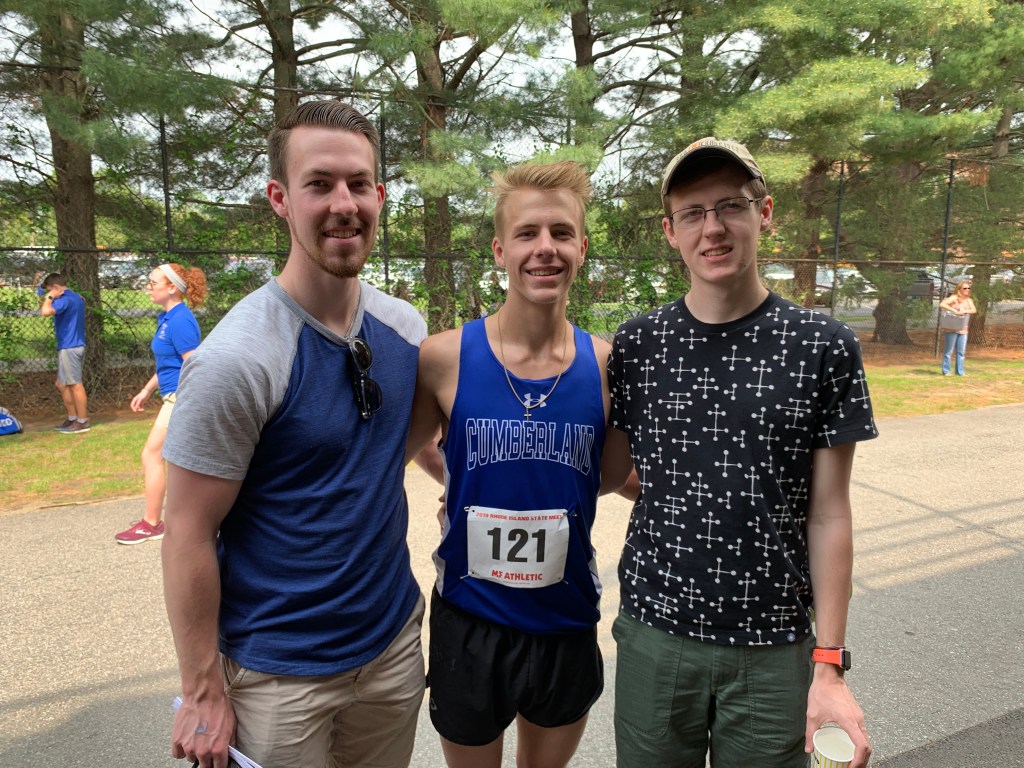
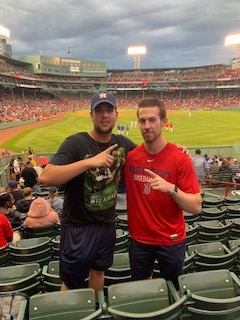
Josh Cayer, a graduating senior from Merrimack College in North Andover, Massachusetts, is merely one of the millions of seniors effected by this pandemic. Graduating with a degree in health science with aspirations of one day becoming a physician’s assistant, Josh was courteous enough to sit down for an interview and discuss how the coronavirus has directly impacted his education and social life.
After asking what his life was like before the spread of this pandemic, Josh says, “I was finishing the second half of my spring semester senior year,” while also, “preparing to go on a service trip for the week of my spring break.” Unfortunately, like most traveling expeditions, sporting events, and social gatherings, that trip to Peru was cancelled.

Originally, Josh’s spring break was simply extended a week, as his school, and so many others around the country, awaited more news on the pandemic’s spread and whether it would be safe to go back to school after an extra week off from classes. Suddenly, during his extended break, he was informed not to return to school and to participate in digital learning for the rest of the semester, therefore concluding his life on campus indefinitely.
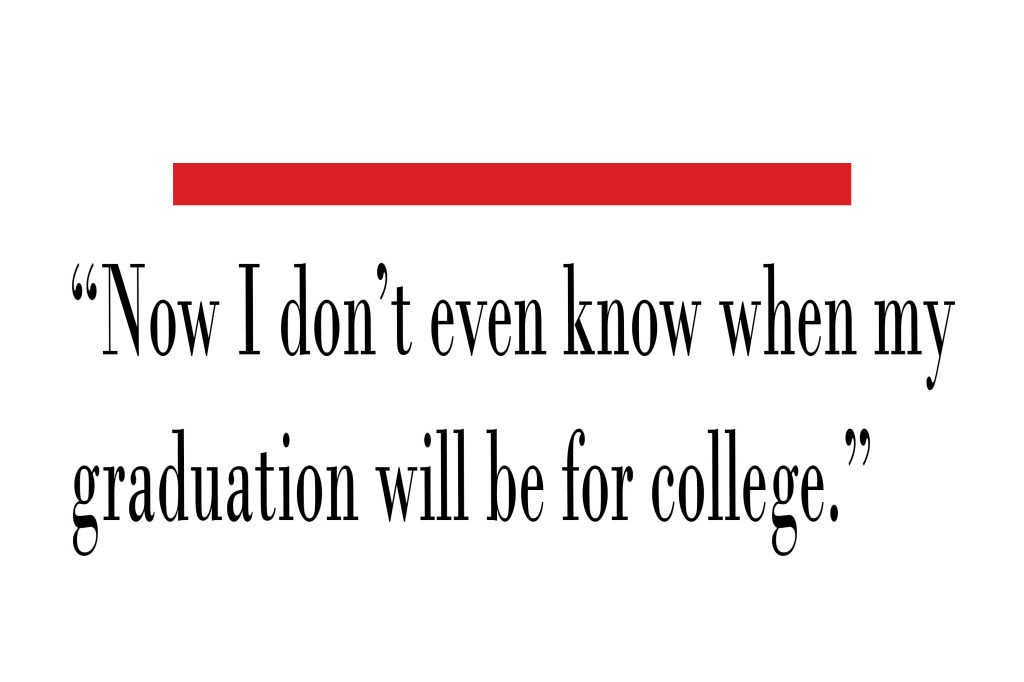
“Now I don’t even know when my graduation will be for college”
This is truly when his life began to change, just like millions of other American children across the nation. When the news reached Josh, and he was told that he would never live on Merrimack’s campus as an enrolled scholar ever again, he immediately thought of his friends and the numerous connections he had made throughout his 4 years at the university.
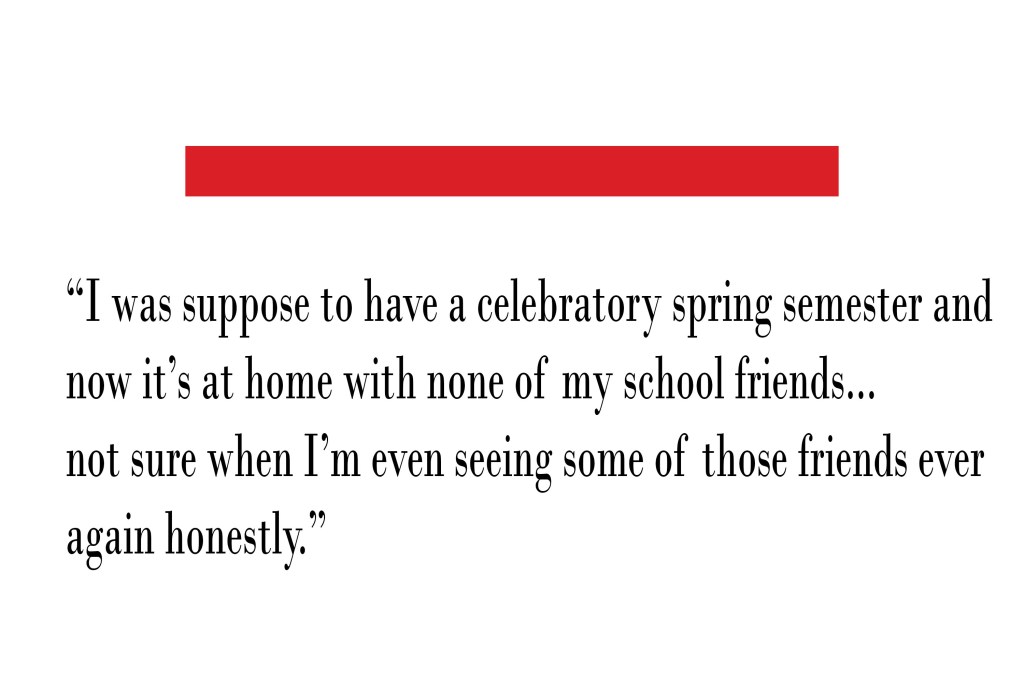
“I was supposed to have a celebratory spring semester and now it’s at home with none of my school friends,” Josh shared with me. “[I’m] not sure when I’m even seeing some of those friends ever again honestly.”
Additionally, as a college student who has spent 3 and a half years learning and studying on campus with the physical presence of his professors and peers, Josh was now forced to adapt to a new style of learning before he could officially graduate. “I’m finishing my classes online and getting my degree that way,” he states. “My life has changed now.”
Not only is the transition from hands-on, active learning to digital online learning, as well as not being able to spend his last couple of months as a college student with the ones who have made his university life so memorable, already difficult enough, but now his future is uncertain as well.
“I’m doing a pre-health care to physician’s assistant, so I’m applying next year [for] 2021,” Josh says. “Some of the services aren’t needed right now so the spots are open, but hospitals aren’t making enough money to hire those people so I’m not even sure what my job will be.”
Prior to the coronavirus’ unstoppable spread, Josh seemed to have a plan for his future and had a general idea on what that may look like. Now, however, his profession and future career aspirations appear murky. He does not know if hospitals, since they are so focused on coronavirus patients and dealing with this pandemic, will even need training physician assistants or if they will hire new, unexperienced health officials during such a hectic time.
Josh’s current life is not the only thing affected by this deadly disease; his future life is as well.
However, Josh, like so many people around the world, are optimistic that the pandemic ultimately will weaken at some point. Despite this, he isn’t confident that, even when the government and health officials declare it is safe to return back to work and live life as the world once had, that people will go back to living life like they normally did prior to the coronavirus.
Josh predicts, “I think once everything opens up for the first time, everyone’s going to be hesitant like it is now with people going to the grocery store, and some people might now believe it is safe to go out…”
This may be true, and the world may never be the same again. Schools and businesses may function completely differently, people may be much more timid and afraid in public, and government agencies and health laws may be established soon after the pandemic has declined.
What cannot be denied, though, is that students like Josh are not rare or scarce across America. Millions of seniors will never get to flaunt their school spirit or experience school life again. Despite the true tragedies, such as death and illness, that are currently disrupting the world, it does not make what these students are facing any less saddening.
The future may be unknown, and billions of lives may have changed temporarily or permanently in last few months worldwide, but what must be learned is that international news is also American news because America and every other country around the world share the same planet. Just ask Josh Cayer if the coronavirus, which was once deemed an Asian or European affair that did not impact Americans, has altered his life.




 Cole Cayer